|
In general, we offer a
large number of topics related to plant x environment interactions,
both under controlled conditions and within our projects abroad. If
you are interested in joining our group you'll find some ideas
below. |
|
|
|
Modelling rice phenology for high altitude production systems |
|
|
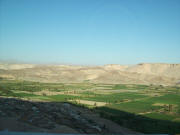
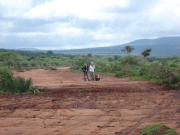
Rice is increasingly produced in high altitude system, particularly in Africa. The narrow windows for rice production needs to fit with the genotypic sensitivity to low temperatures during specific phenological stages. The app 'RiceAdvice' helps farmers selecting the best fit variety and suggests management options for rice production in West Africa. In the process of making the app available to farmers in East Africa, the scope of the app needs to be widened too include genotypic temperature responses. Within this topic we collaborate with the Africa Rice Center who obtained a multi-location data set on a large number of rice varieties at different altitudes all over East Africa. The MSc candidate will analyse the data together with a senior scientist from AfricaRice and supervised by me and my team. If the pandemic allows travel to AfricaRice in Ivory Coast to work with the modeller will be included. Depending on the final topic, analytical work will be 3-4 months, but since a stay abroad is normally needed the overall time needed will be longer. If you are interested, please make an appointment by email to discuss the details. Begin: as soon as possible |
|
|
Contact: fa @uni-hohenheim.de |
|
|
Bacterial effects on iron toxicity in rice |
|
|
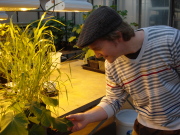
Iron toxicity is one of the major constraints for rice production in many rice growing countries. Excess iron uptake leads to damages in the cell membranes especially within the leaves leading to decreased photosynthesis and smaller yields. In our earlier research, strategies of different rice varieties to cope with excess iron were investigated and specific bacterial strains were found to play a role for the plant to cope with iron toxicity. Currently we focus on the role of different bacterial strains within this complex mechanism, especially on optimizing techniques to effectively understand the interactions of bacteria and rice. Within this topic we offer different Master of Science Thesis that include greenhouse rice cultivation under iron toxic conditions, cultivation of bacterial strains in the laboratory, inoculation of bacteria to rice plants and enzyme activity measurements as well as cultivation and identification of bacteria in the laboratory.
(1) Optimization of surface sterilization of rice roots to
subsequently ensure cultivating only the desired strains on the rice
roots. Depending on the topic, experimental work will be 3-4 months. If you are interested, please make an appointment by email to discuss the details. Begin: any time |
|
|
Contact: fa @uni-hohenheim.de |
|
|
|
|
|
Chlorine stress in plants |
|
|
Salinity is a major constraint to agricultural production worldwide. Often it is sodium chloride in excess accumulation in plant tissues that cause the damage to the crops. However, plants do differ in their sensitivity to either sodium or chlorine. Little is known as to how chlorine stress affects plants as it is so often accompanied by sodium. We offer a literature-based Master of Science Thesis to investigate this topic. A review of currently available knowledge shall be written and a literature database shall be assembled. General understanding of plant physiology and plant nutrition is required. Begin: any time |
|
|
Contact: fa @uni-hohenheim.de |
|
|
|
|
|
|
|
|
Light physiology of rice |
|
|
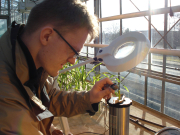
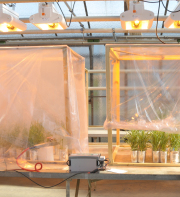
Little is known about the illumination optimal for rice to be most productive, to induce an optimal harvest index, and the effects on phenology. We are testing cutting edge LED technology on different rice varieties in a variety of settings. By optimizing the above ground environment for optimal photon absorption by the plant, we can vary illumination direction, light quality, and light quantity. We offer several Master of Science Theses as well as Bachelor of Science Theses based on a similar set-up in the greenhouse but with distingly different research questions. Thesis work will involve practical work in the green house. General understanding of plant physiology and photosynthesis is required. Depending on the topic, experimental work will be 4-6 weeks (BSc) and 3-4 months (MSc). If you are interested, please make an appointment by email to discuss the details. Begin: any time |
|
|
Contact: fa @uni-hohenheim.de |
|
|
|
|
|
|
|
|
Effects of phytohormone application on the root length of aeroponically grown rice |
 |
One of the major problems in growing plant without substrate is the space available for the root zone. Unproductive promotion of root growth should be avoided to reduce the yield penalty. Roots of aeroponically grown rice tend to elongate more than when grown in soil. Plant hormones as well as pH levels are known to affect morphology and size of root systems. This study will investigate if a combination of phyto-hormones and pH levels can be employed to restrict root length while maintaining root density. Two rice varieties will be tested in an aeroponic system available for responses of their root system to different combinations of pH and phyto-hormones such as ethylene, ABA, and jasmonates. The experimental part of the study will take 4-5 months Begin: any time |
 |
Contact: fa @uni-hohenheim.de |

|
|
|
|
|
|
|
Effects of low temperatures on germination and early seedling vigor in rice |
|
Rice is a thermophilic crop. Recently, due to changes in temperatures and the need to cultivate additional area for rice, rice production has increasingly entered into high altitude systems. Those systems are temperature limited for a large share of the season and fast early development is a prerequisite for a successful rice crop in higher altitudes. The study will investigate germination rate and the efficiency of grain reserve mobilization under different top soil temperatures of 5-8 contrasting rice genotypes from Madagascar. The experimental part of this greenhouse or climate chamber study will take about 4 months. Begin: any time |
|
Contact: fa @uni-hohenheim.de |